

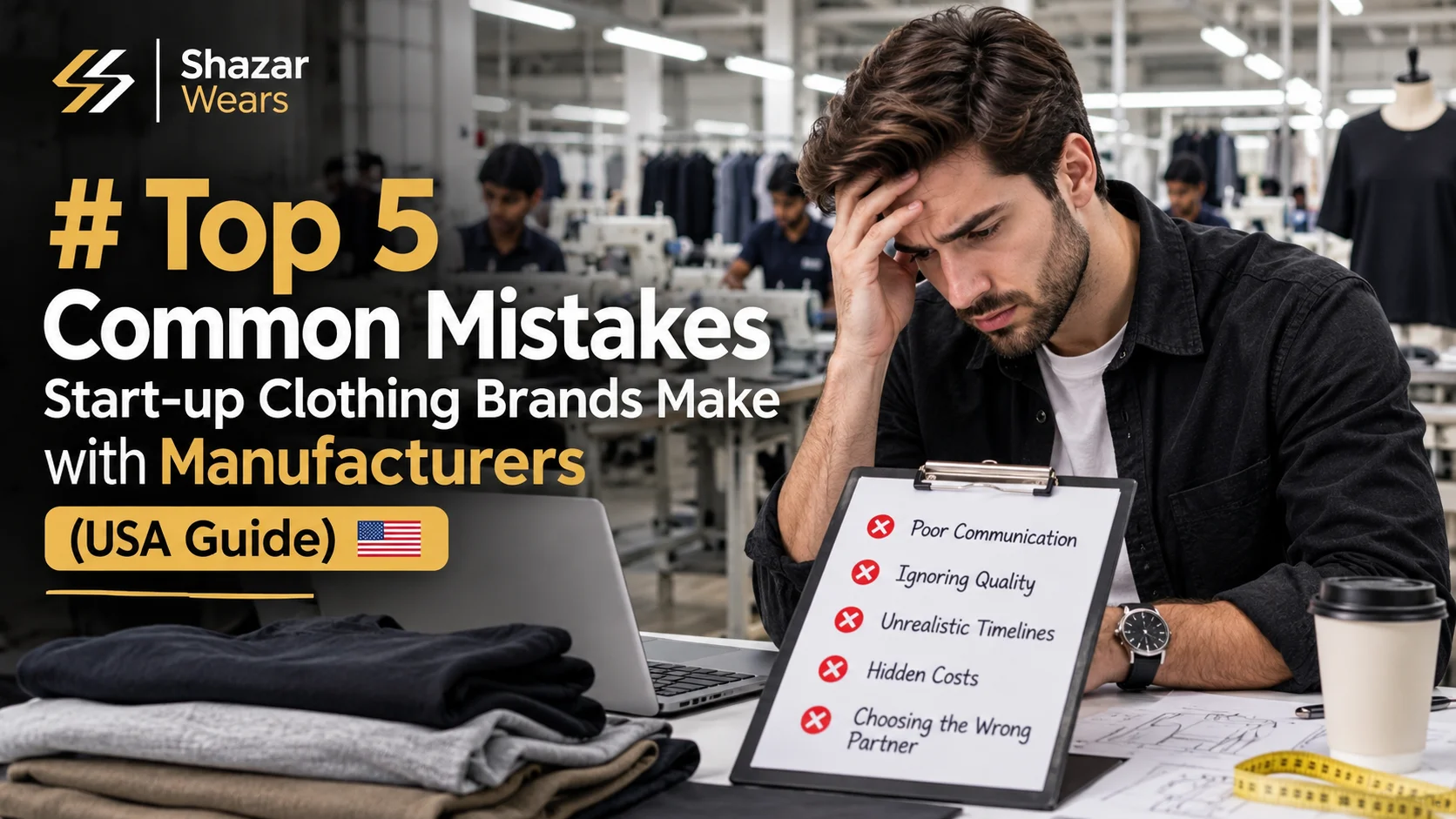
Starting a clothing brand in the United States is an exciting opportunity. From launching a streetwear collection to building a premium sportswear or private-label apparel brand, the fashion industry offers plenty of possibilities for new entrepreneurs.
However, turning a clothing idea into a successful business requires more than creative designs and marketing. Finding the right clothing manufacturer is one of the most important decisions a start-up brand will make.
Many new clothing entrepreneurs make avoidable mistakes when working with manufacturers. These mistakes can lead to poor product quality, unexpected expenses, production delays, and disappointed customers.
Whether you are launching your first T-shirt collection, building a streetwear label, or developing a complete fashion line, understanding these challenges can help you make better manufacturing decisions.
In this guide, Shazar Wears explains the five most common mistakes start-up clothing brands make when working with manufacturers and how to avoid them.
1. Choosing a Manufacturer Based Only on the Lowest Price
One of the biggest mistakes new clothing brands make is selecting a manufacturer simply because they offer the lowest production price.
When working with a limited startup budget, choosing the cheapest quotation may seem like a smart business decision. However, a low price does not always guarantee good value.
Some manufacturers may use lower-quality fabrics, inconsistent stitching, poor finishing, or materials that do not meet your expectations.
These problems can affect your brand reputation and result in customer complaints or product returns.
How to avoid this mistake:
Before selecting a clothing manufacturer, evaluate:
- Fabric quality and material specifications.
- Stitching, construction, and finishing.
- Manufacturing experience and capabilities.
- Sample quality and consistency.
- Production costs and additional charges.
- Communication and customer support.
Always compare manufacturers based on overall value rather than price alone.
A reliable manufacturing partner should help you maintain consistent quality while keeping production costs within your budget.
2. Not Requesting Samples Before Bulk Production
Another common mistake is placing a bulk production order without properly reviewing product samples.
A clothing design may look perfect on a computer screen, but the finished garment can look and feel completely different.
Fabric thickness, color accuracy, fitting, stitching, printing, embroidery, and sizing can all affect the final product.
For start-up clothing brands targeting the USA market, product quality is particularly important because customers expect garments to match the descriptions and images shown online.
How to avoid this mistake:
Always request a pre-production sample before approving bulk manufacturing.
Check the following details:
- Fabric composition and GSM.
- Color accuracy.
- Measurements and size specifications.
- Stitching and construction.
- Printing and embroidery quality.
- Labels, tags, and packaging.
- Overall appearance and comfort.
If something needs improvement, communicate your feedback before production begins.
Pro Tip: Approve a final sample that represents the exact specifications you expect in your bulk order.
3. Providing Incomplete Designs and Technical Specifications
Many first-time clothing entrepreneurs approach manufacturers with only a basic design image or reference photograph.
Although this may communicate the general idea, it often does not provide enough information for accurate production.
Manufacturers need clear technical specifications to understand exactly how a garment should be constructed.
Without proper documentation, misunderstandings can occur regarding fabric selection, measurements, colors, stitching, printing placement, and finishing details.
How to avoid this mistake:
Prepare a professional tech pack for each clothing style.
A complete clothing tech pack should include:
- Technical sketches or garment illustrations.
- Fabric type and composition.
- Fabric weight (GSM).
- Size chart and measurement specifications.
- Color references.
- Stitching and construction details.
- Printing and embroidery placement.
- Label and packaging requirements.
A detailed tech pack reduces confusion and helps manufacturers understand your expectations.
If you do not have professional technical documentation, discuss your design requirements with the manufacturer before moving forward.
4. Ignoring Minimum Order Quantities (MOQs) and Hidden Costs
Budget management is essential when launching a clothing brand.
Many start-up entrepreneurs focus only on the per-piece manufacturing price and overlook other costs involved in developing and producing a clothing collection.
Depending on the manufacturer and production requirements, additional expenses may include:
- Sample development charges.
- Fabric sourcing costs.
- Custom labels and packaging.
- Printing and embroidery setup.
- Shipping and freight.
- Import duties and applicable taxes.
- Quality inspection expenses.
Another important consideration is Minimum Order Quantity (MOQ).
Some manufacturers require a minimum number of pieces per design, color, or size. This can create challenges for brands that want to launch with a small collection.
How to avoid this mistake:
Before confirming an order, ask your manufacturer for a detailed quotation covering:
- Minimum order quantity.
- Cost per garment.
- Sample development charges.
- Customization expenses.
- Packaging costs.
- Estimated production timeline.
- Shipping arrangements.
- Payment terms.
Understanding the complete cost structure helps you calculate your actual investment and avoid unexpected financial pressure.
5. Choosing the Wrong Manufacturing Partner
Perhaps the most expensive mistake a start-up clothing brand can make is partnering with the wrong manufacturer.
A manufacturer may offer attractive prices and impressive product photographs, but that does not necessarily mean they are the right fit for your business.
Poor communication, inconsistent quality, missed deadlines, and a lack of transparency can create serious problems.
Your manufacturer should be more than a supplier. They should be a reliable production partner who understands your brand’s requirements and long-term goals.
How to avoid this mistake:
Before making a final decision, evaluate the manufacturer’s:
- Apparel manufacturing experience.
- Product specialization.
- Communication and responsiveness.
- Quality control procedures.
- Sampling and development capabilities.
- Production capacity.
- Client references and previous work.
- Ability to handle repeat orders.
Ask questions, review samples, and discuss your expectations clearly.
It is also important to establish written agreements covering product specifications, pricing, timelines, payment terms, and quality expectations.
A strong manufacturing relationship can support your business as it grows from a small start-up into an established clothing brand.
How to Choose the Right Clothing Manufacturer for Your USA Brand
Finding the right manufacturing partner is an important step toward building a successful clothing business.
Many US-based clothing startups explore international manufacturing options to access different production capabilities, customization opportunities, and competitive pricing.
When evaluating international manufacturers, consider factors such as:
Product Specialization: Choose a manufacturer experienced in your product category, whether it is streetwear, sportswear, activewear, hoodies, or casual apparel.
Communication: Ensure that the manufacturer understands your requirements and provides clear updates throughout development and production.
Quality Standards: Request samples and establish clear inspection requirements.
Shipping and Logistics: Discuss shipping methods, delivery estimates, customs documentation, and import responsibilities before confirming your order.
Scalability: Consider whether the manufacturer can support your future production requirements as your brand grows.
The right partner should understand both your immediate production needs and your long-term business objectives.
Why Start-up Clothing Brands Work with Shazar Wears
Suggested internal brand section
At Shazar Wears, we understand that launching a clothing brand involves careful planning, product development, and reliable manufacturing support.
Our focus is on helping clothing businesses bring their apparel concepts to life through customized manufacturing solutions.
Whether you are developing your first collection or expanding an existing clothing line, we work with a range of apparel categories, including:
- Custom T-shirts and oversized T-shirts.
- Hoodies and sweatshirts.
- Sportswear and activewear.
- Streetwear apparel.
- Custom tracksuits.
- Private-label clothing.
We believe successful apparel manufacturing starts with clear communication, attention to detail, and a strong understanding of each client’s requirements.
For start-up clothing brands in the USA, choosing the right production partner can make the journey from initial design to finished garments more organized and manageable.
Frequently Asked Questions (FAQs)
1. What is the biggest mistake new clothing brands make when choosing manufacturers?
Choosing a manufacturer based only on the lowest price is one of the most common mistakes. Brands should also evaluate product quality, communication, experience, and production capabilities.
2. Should I order samples before bulk clothing production?
Yes. Reviewing and approving samples before bulk production helps identify problems with fabric, sizing, stitching, colors, and overall garment quality.
3. What is MOQ in clothing manufacturing?
MOQ stands for Minimum Order Quantity. It refers to the minimum number of garments a manufacturer requires for a production order.
4. Do clothing manufacturers work with start-up brands?
Yes. Many manufacturers work with emerging clothing brands, although their MOQs, pricing, customization options, and production requirements can vary.
5. What should I send a clothing manufacturer to get an accurate quotation?
You should provide design references, technical specifications, fabric details, estimated quantities, size breakdowns, customization requirements, and packaging preferences.
6. Is international clothing manufacturing suitable for USA start-ups?
It can be. International manufacturing may provide access to different production capabilities and pricing options. However, brands should evaluate shipping, customs, quality control, communication, and total landed costs.
7. How can I ensure consistent clothing quality?
Approve a detailed pre-production sample, document all specifications, and establish quality inspection requirements before bulk production begins.
Final Thoughts
Building a successful clothing brand requires more than great designs. Choosing the right manufacturing partner, understanding production requirements, and maintaining consistent quality are equally important.
By avoiding these five common mistakes, start-up clothing brands in the USA can reduce unnecessary risks, manage their budgets more effectively, and build stronger manufacturing relationships.
Take time to research manufacturers, review samples, prepare detailed specifications, and communicate your expectations clearly.
The right manufacturing partnership can turn your clothing brand vision into a product customers are proud to wear.